27 Oct 2026
Decoding Demographic Trends and Regulatory Evolution in a Coastal Enclave

Coastal enclaves around the world continue to experience notable shifts in population composition alongside ongoing adjustments to local governance frameworks, and these patterns warrant close examination through available data and policy records. Researchers at various institutions have tracked how migration patterns reshape community structures in these areas, with many enclaves seeing inflows from urban centers while younger residents depart for economic opportunities elsewhere. Data from the U.S. Census Bureau indicates that certain coastal regions recorded population increases of up to 12 percent between 2020 and 2025, driven primarily by remote workers seeking proximity to natural features, yet these gains often coincide with rising median ages as long-term residents remain in place.
Population Composition Changes
Demographic records reveal that enclaves along temperate coastlines attract retirees at higher rates than inland counterparts, and statistics compiled by the Australian Bureau of Statistics show similar trends where coastal postcodes experienced a 9 percent rise in residents over age 65 during the same five-year span. At the same time, household sizes have contracted in many locations because younger families opt for suburban developments with more space, while single-person dwellings now account for over 35 percent of occupied units according to multiple regional surveys. These transitions affect local service demands, particularly in healthcare and education sectors that must adapt staffing and infrastructure to match evolving needs without the benefit of steady year-round enrollment figures.
Observers note that seasonal population fluctuations add another layer of complexity, since tourism spikes can double effective resident counts during peak months and strain utilities originally designed for smaller permanent populations. In October 2026, several enclaves plan to implement updated visitor management systems that rely on real-time occupancy sensors, a direct response to data showing peak summer loads exceeding infrastructure capacity by 40 percent in prior seasons. Such measures build on earlier pilot programs tested in comparable European coastal zones where similar technologies helped balance economic activity with resource conservation goals.
Regulatory Frameworks and Updates
Regulatory evolution in these enclaves often follows documented environmental pressures and housing shortages, with zoning ordinances undergoing periodic revisions to address both. The European Environment Agency has published findings that link stricter shoreline setback requirements to reduced erosion rates in protected zones, prompting local councils in multiple countries to adopt parallel rules that limit new construction within 200 meters of high-tide lines. Meanwhile, permitting processes have lengthened in many jurisdictions because review boards now require environmental impact assessments that incorporate climate projection models extending through 2050.
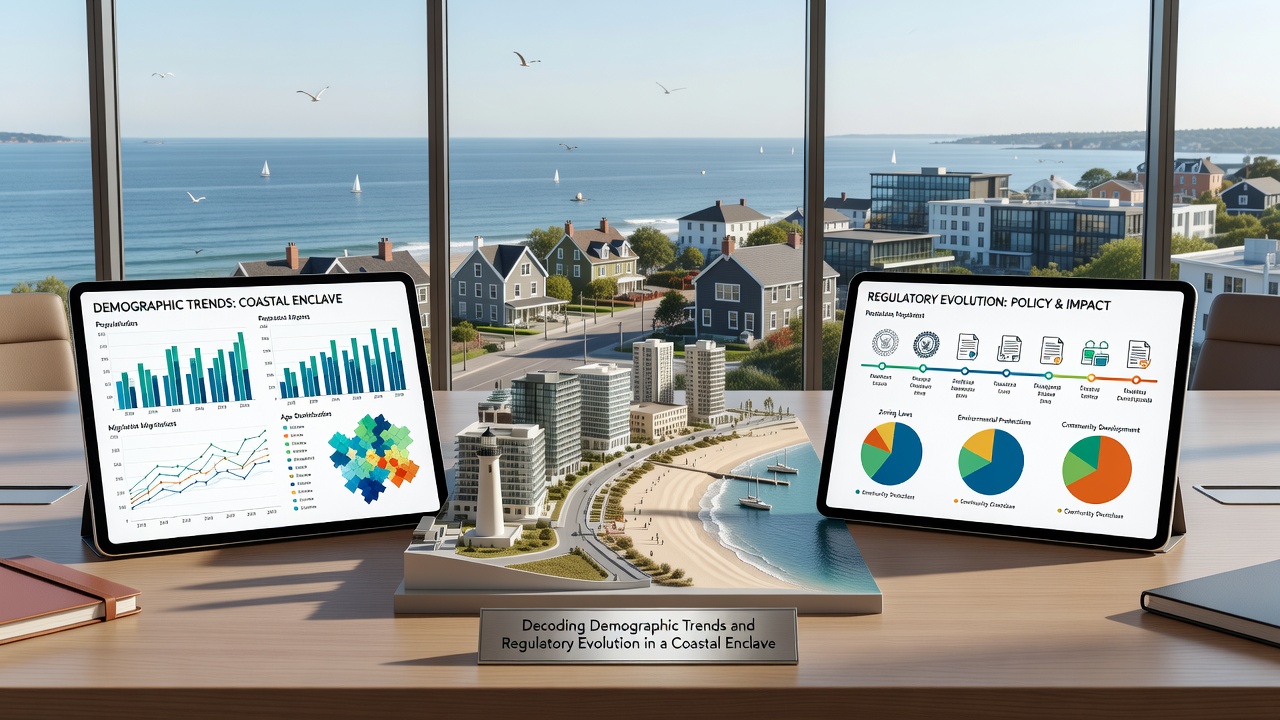
Policy adjustments also target short-term rental markets that have expanded rapidly, and municipal records from several North American enclaves document ordinances capping the percentage of residential units available for such use at 15 percent of total housing stock. These limits emerged after studies by university research teams demonstrated correlations between high rental concentrations and declining long-term affordability for permanent residents. Enforcement mechanisms vary, yet many localities now employ automated compliance tracking systems that cross-reference property records with booking platform data to identify violations more efficiently than manual inspections alone.
Interplay Between Trends and Policy
The relationship between demographic movements and regulatory responses appears cyclical in nature, since population growth frequently triggers new rules that then influence future settlement patterns. Figures released by Statistics Canada illustrate how enclaves with tightened development restrictions saw slower net migration gains after 2023, whereas nearby areas without comparable limits continued to attract newcomers at previous rates. This dynamic prompts planners to evaluate trade-offs between preserving community character and accommodating economic vitality, often through public consultation processes that aggregate resident input over multiple sessions.
Additional layers emerge when international agreements on marine resource management intersect with local ordinances, creating layered compliance requirements for waterfront businesses. One study conducted by researchers at the University of Cape Town examined how South African coastal municipalities integrated national fisheries regulations into municipal zoning codes, resulting in designated zones that separate commercial and recreational uses while maintaining public access corridors. Similar integrative approaches surface in Australian planning documents where biodiversity offsets accompany new housing approvals, ensuring that development footprints do not exceed predefined ecological thresholds.
Looking Ahead
Records indicate that forthcoming data releases scheduled for late 2026 will provide updated baseline measurements against which communities can assess progress toward stated policy objectives. These datasets, when combined with ongoing monitoring of regulatory implementation, should supply clearer pictures of how demographic and governance elements continue to shape one another in coastal settings. Observers continue to track these developments through official channels to maintain accurate records of evolving conditions across multiple regions.