24 Mar 2026
Morstone is a naturally occurring mineral valued for its durability and subtle coloration. Formed under specific geological conditions, it has been utilized across centuries in both practical and decorative contexts. This briefing outlines its background, defining characteristics, and common applications without exaggeration or speculation.

Historical Context
Records indicate that Morstone deposits were first identified in mountainous regions where tectonic activity created the necessary pressure and heat for its development. Early civilizations extracted the material using basic tools and incorporated it into tools, building foundations, and ornamental objects. Archaeological findings show consistent use in structures requiring resistance to weathering, suggesting an early understanding of its practical advantages over softer stones.
Over time, extraction methods improved with the introduction of metal implements, allowing larger blocks to be quarried. Trade routes carried Morstone to distant settlements, where it appeared in public works and private residences. Documentation from later periods notes its preference in environments exposed to moisture and temperature fluctuations.
Physical Properties
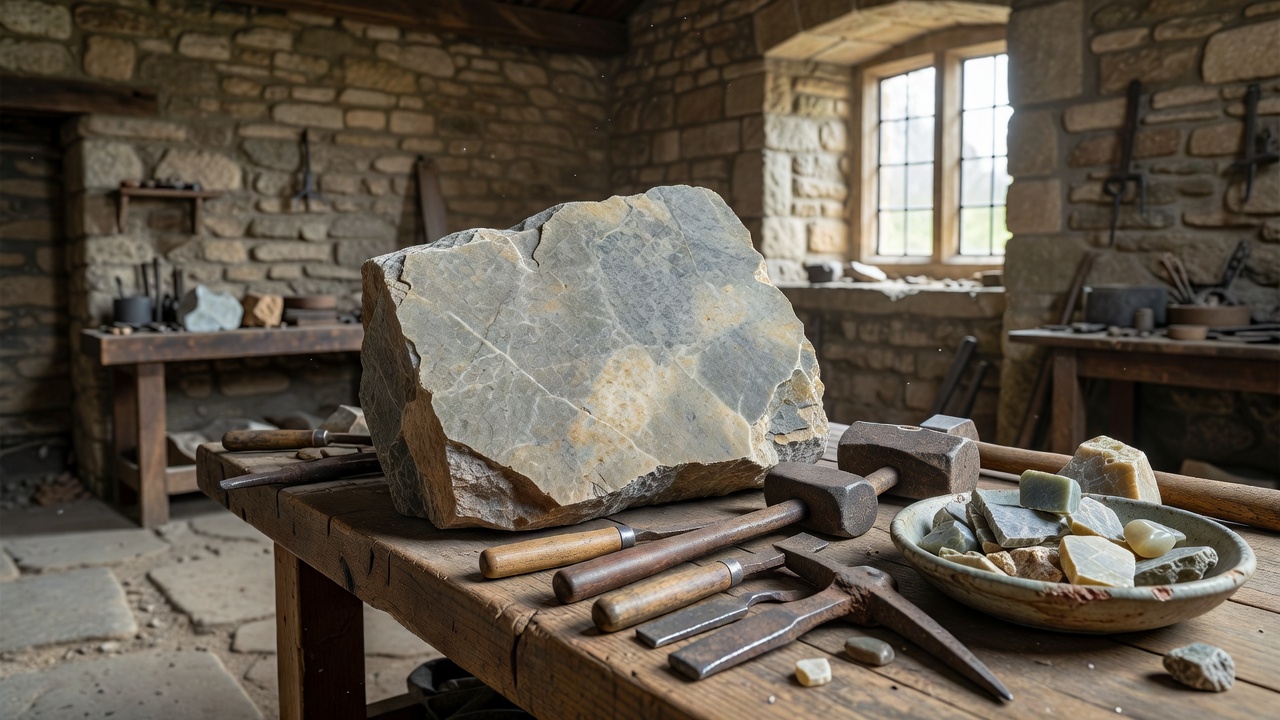
Morstone typically exhibits a medium hardness rating, making it workable with standard masonry equipment yet strong enough for load-bearing purposes. Its color ranges from muted gray to soft brown, often with faint veining that varies by deposit. The mineral demonstrates low porosity, which contributes to its resistance against water absorption and staining when properly sealed.
Thermal stability is another noted trait, allowing it to maintain structural integrity under repeated heating and cooling cycles. Density measurements place it between common limestone and granite, providing a balance of weight and strength. These attributes are verified through standard laboratory testing rather than anecdotal reports.
Contemporary Applications
Today Morstone appears in flooring, countertops, and exterior cladding where longevity is prioritized. Its neutral palette complements various design styles without dominating visual schemes. In landscaping, smaller pieces serve as paving or retaining elements due to their ability to withstand outdoor conditions.
Artisans also employ Morstone for carved details and inlays, taking advantage of its fine grain that accepts precise tooling. Maintenance involves periodic cleaning with mild solutions and occasional resealing to preserve surface qualities. When sourced responsibly, the material offers a reliable option for projects seeking both function and understated appearance.
Selection should consider local building codes and compatibility with other materials to ensure optimal performance over extended periods.