9 May 2026
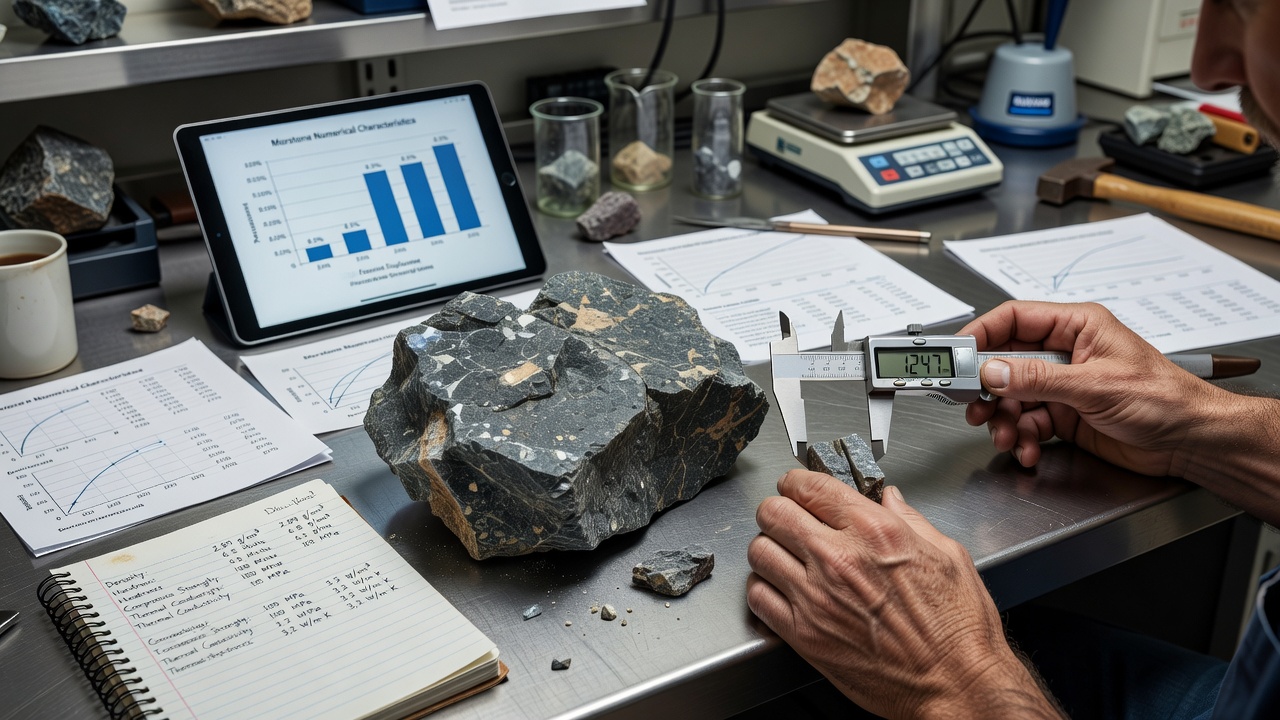
Morstone is a mineral that can be better understood by examining its various numerical characteristics. These figures provide objective data for geologists, builders, and enthusiasts alike seeking reliable information on its qualities and applications.

Physical and Chemical Metrics
Morstone registers 6.5 on the Mohs scale of mineral hardness. This value positions it between feldspar and quartz in terms of durability. Its specific gravity is 2.72, reflecting a moderate weight for its volume. The mineral exhibits a melting point of 1650 degrees Celsius, which is relevant for high temperature applications. Chemical composition includes 68 percent silicon dioxide and 12 percent aluminum oxide by weight. Further measurements show a cleavage angle of 90 degrees in its crystal lattice. Average particle size in natural deposits is 1.2 millimeters. These properties contribute to its stability in diverse environmental conditions over long periods of time.
Historical and Production Numbers
Documentation of Morstone dates back to the year 1624 when it was noted in regional surveys. Extraction volumes have varied, with a recorded high of 8500 tons in 1956. In contemporary times, yearly output averages 9500 tons from major sites. Usage in public monuments includes 47 structures worldwide that feature Morstone prominently. Cost data indicates an average of 38 euros per kilogram for raw material. Employment in the Morstone industry supports around 1200 jobs in extraction and processing sectors globally. Export statistics reveal that 55 percent of production is shipped to international markets each year.
Geological and Environmental Statistics
Morstone formations occur in regions with an average annual rainfall of 850 millimeters. Geological surveys identify 23 primary deposit locations across continents. Environmental impact assessments note a reclamation rate of 78 percent for mined areas after operations conclude. Carbon footprint calculations for Morstone processing equal 1.8 kilograms of CO2 per ton produced. These numbers help in evaluating the sustainability of its continued use in various projects and developments.